
Category: Articles
-

Escaping vs. Re-inventing Our Reality
“Reality” is such a large blanket word used to describe everything in our experience. Yet, it is rare to find someone truly investigating the nature of their experience of this reality. Consider someone with an interest in conscious eating. They might understand every process required to ensure food is clean from farm to table. This…
-

How We Create Entities: The Neuroscience of the Divine
Have you ever been in a dream and felt it was stunningly clear—vivid, with a tangible body and a concrete sense of self? How is it that the brain can trick itself into believing in a wholly fantastical world, each time we go to bed? Throughout evolutionary history, the vast majority of human cognitive functions…
-

Knees Beyond Fear, and Ankles Beyond Reaction
The anatomy of the body is fascinating. It is so complex and nuanced that modern science, for all its advancements, is often playing catch-up to the intuitive wisdom of the body itself. While biomechanics can explain leverage and force, it struggles to fully account for the “flow state”—that moment where the body surpasses its theoretical…
-

Psychological Counselling for Your Organs
Do Your Organs Have a Psychology? It may seem strange at first, but each of your organs has a psychological quality—a temperament that mirrors both its physical function and its subtle energetic movement. In ancient sciences like Ayurveda and TCM, no organ acts merely as a mechanical structure. Each organ: Modern Western science tends to isolate…
-
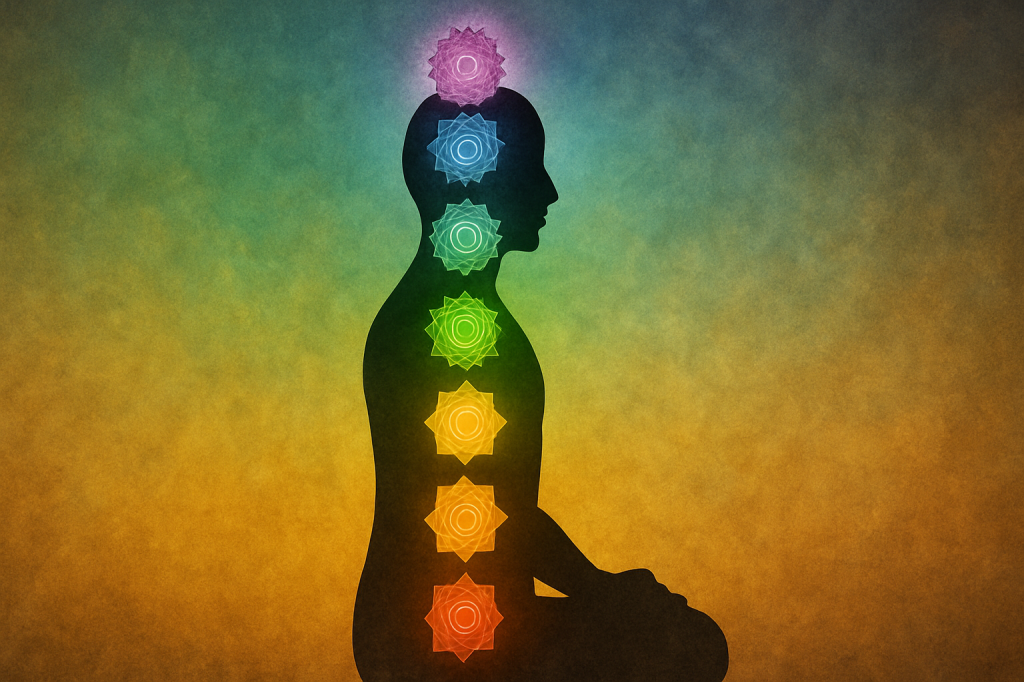
The Real Chakras
The topic of chakras is often presented in a confusing way today. With the rise of new-age spirituality, the term “chakra” is used casually and frequently—sometimes without depth or context. The most widespread modern system describes seven chakras:• Muladhara – Root• Svadhishthana – Sacral• Manipura – Solar Plexus• Anahata – Heart• Vishuddha – Throat• Ajna – Brow• Sahasrara – Crown However, historically, the number of chakras varied widely depending on…
-

The Yoga Space and the Mask of Authenticity
When we go into a yoga studio, we are presented with an atmosphere that makes us feel serene, calm, beautified. The space is often curated in a way that resembles the holy — temples or places of worship where one can find the sanctity to discover God. There is often a teacher who radiates the…
-
Enjoying the fruits of our practice
In the Mahabharata, when the war of Dharma unfolds on the battlefield of Kurukshetra, Arjuna stands at the brink of battle, facing not only an opposing army but his own inner world projected outward. The Kauravas—his cousins—each represent qualities Arjuna has grappled with within himself. Arjuna, on the other hand, represents the Ekagra chitta—the one-pointed, focused…
-

Unlocking the Power of OM
Om (ॐ), or AUM, is the sacred syllable that often marks the beginning and end of a yoga session. But how often do we pause to remember its deeper significance? Across the vast history of yogic thought—from the time of the ancient Vedic Samhitas, especially the Sama Veda and Yajur Veda (1500–1000 BCE)—the sound Om, often called Pranava, has been revered as the primordial…
-
How to Apply Yogic Ethics in Modern-Day Life
Let us first understand what we mean by yogic ethics. Yoga, at its core, is not merely physical postures or breath control—it is synonymous with samadhi, the pure, clear, concentrated essence of being. A state where the fluctuations of the mind have ceased, and one abides in that which is unchanging. For many of us living in…
-
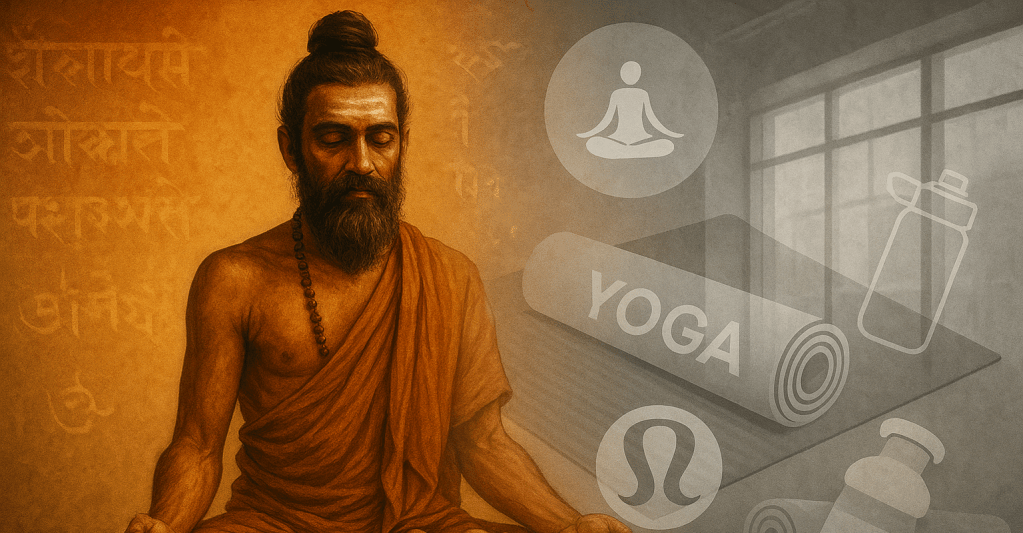
The Erasure of Authentic Yoga practice
From Sacred Practice to Global Commodity In the modern age, yoga has undergone significant transformation. On one hand, it has evolved—adapting to the lives of contemporary people. On the other, it has been uprooted from its cultural and spiritual origins. Yoga today is often reduced to a wellness trend, divorced from the philosophical and ethical…
 Amman Advaita