
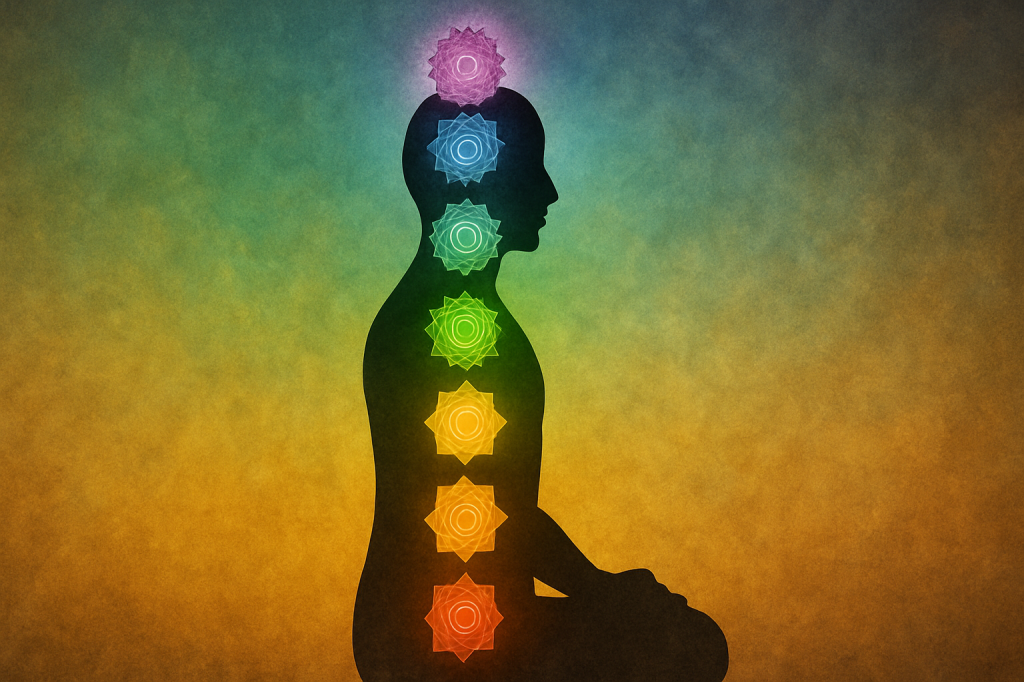
The topic of chakras is often presented in a confusing way today. With the rise of new-age spirituality, the term “chakra” is used casually and frequently—sometimes without depth or context.
The most widespread modern system describes seven chakras:
• Muladhara – Root
• Svadhishthana – Sacral
• Manipura – Solar Plexus
• Anahata – Heart
• Vishuddha – Throat
• Ajna – Brow
• Sahasrara – Crown
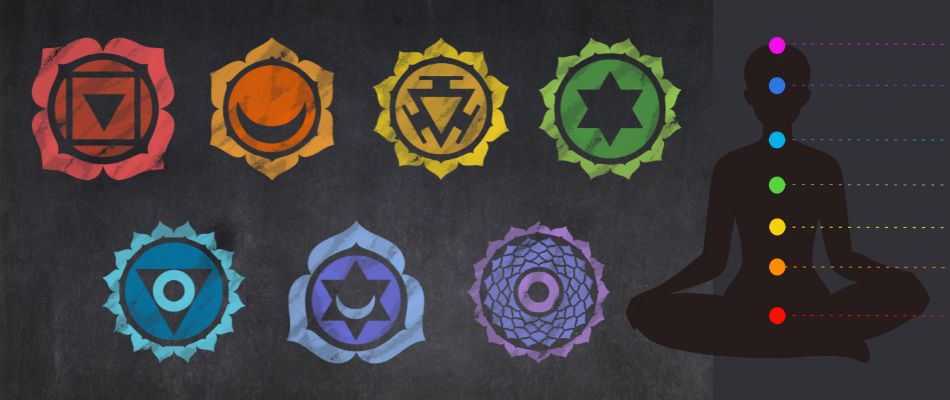
However, historically, the number of chakras varied widely depending on the lineage and the specific purpose of a sadhana. Some ancient systems used four chakras, others five, six, or more. There are as many chakra systems as there are tantric practices—and each system served a functional purpose rather than a universal map.
Why the Mind Is Essential for Chakra Work
In yogic traditions, the mind is the ground on which all subtle practices operate.
The body is the medium, but the mind is the tool.
This may seem counter to modern, body-first approaches. But this older framework has a clear benefit: it recognises that the quality of mind determines the quality of practice. Chakras, then, are primarily mental and energetic constructs, not anatomical organs.
The Physical-Body Interpretation
Some practitioners map chakras onto the physical body—especially the endocrine system. In this view, chakras correspond to glands such as:
- Muladhara → Adrenal glands (fight/flight response)
- Svadhishthana → Gonads (reproduction, fluidity)
- Manipura → Pancreas (digestion, metabolism)
- Anahata → Thymus (immunity, emotional stability)
- Vishuddha → Thyroid (communication, metabolism regulation)
- Ajna → Pituitary (master gland, regulation)
- Sahasrara → Pineal (circadian rhythm, symbolism of awakening)

This framework is helpful for people with a logical or scientific bent. Hormones influence wellbeing and perception. However, they are not “chakras” themselves.
Frequency, Vibration, and the Myth of “Opening” Chakras
A subtler interpretation describes chakras in terms of vibrations or frequencies. Here, people often speak of:
- “opening” chakras
- “activating” chakras
But this assumption is incorrect.
If you are alive, your chakras are already open.
There is no such thing as a “closed” chakra.
What people experience instead are:
- emotional constrictions
- habitual patterns
- energetic stagnations
- psychological imprints
Chakras become clearer, not open.
Balancing practices can influence mood and presence, because the mind influences the body, and the body influences the psychophysical field.
Sound: The Traditional Method for Influencing Chakras
Ancient teachings emphasise the use of sound.
There are 51 bija (seed) syllables, each resonating with specific energetic qualities and placed at various points in the body through visualization.
Other tools such as:
- singing bowls
- gongs
- mantra recitation
are used to steady the mind and guide attention into the subtle body.

Yoga, Breath, and the Five Pranas
Physical postures paired with specific breath patterns influence the five pranas (winds):
- Prana
- Apana
- Samana
- Udana
- Vyana
These winds move through nadis, subtle channels of the energetic body.
Postures + breath = movement of winds → influence on chakra patterns.
A More Subtle Understanding: Chakras as Mind-Made Structures
The most nuanced teachings describe chakras as convergence points of the three main nadis:
- Ida
- Pingala
- Sushumna
These meet at various points, creating psychic knots.
Traditional texts speak of three granthis (“knots”):
- Brahma Granthi – attachment to physical identity
- Vishnu Granthi – attachment to emotional identity
- Rudra Granthi – attachment to intellectual/spiritual identity
To “pierce” these knots, practitioners cultivate:
- purified perception
- stable attention
- breath mastery
- subtle-body visualization
From this perspective, chakras are not physical but have subtle effects on the physical system.
They exist in the illusory body, shaped by mind and imagination.
They are powerful psychological tools that help rewire habits and patterns.
So, Are Chakras Real?
Not in an objective, measurable, scientific sense.
Chakras are real as experiential phenomena—as inner maps for those who can engage the imagination fully and feel into subtle states. When visualized, colored, enlivened, and inhabited with symbolic deities, chakras become a transformative mirror for the mind.
This is the essence of Yoga Tantra (Generation Stage):
Transform the inner world,
and the mind begins to reflect that world.
Over time, personality shifts toward:
- clarity
- kindness
- steadiness
- wisdom
Not because chakras “open,” but because mind trains mind.
Sarva Mangalam,
Amman Advaita
 Amman Advaita
Leave a comment